
Autumn Adventures: How We Use the Changing Seasons to Inspire Learning
Published on October 7, 2026
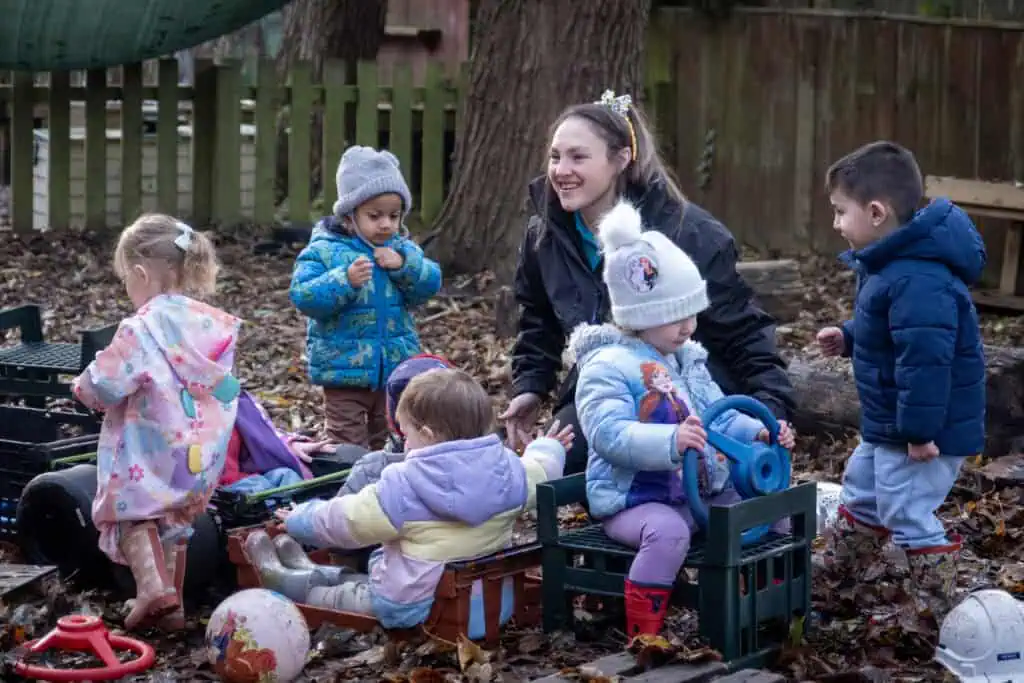
There is something truly magical about autumn through the eyes of a young child. Leaves that were green only weeks ago now flutter down in shades of gold, amber, and crimson. Conkers appear on the ground as if by magic, puddles invite splashing, and the morning air smells of damp earth and woodsmoke. To an adult, it is simply a change in the weather. To a toddler, it is an entire world of new discoveries waiting to be explored.
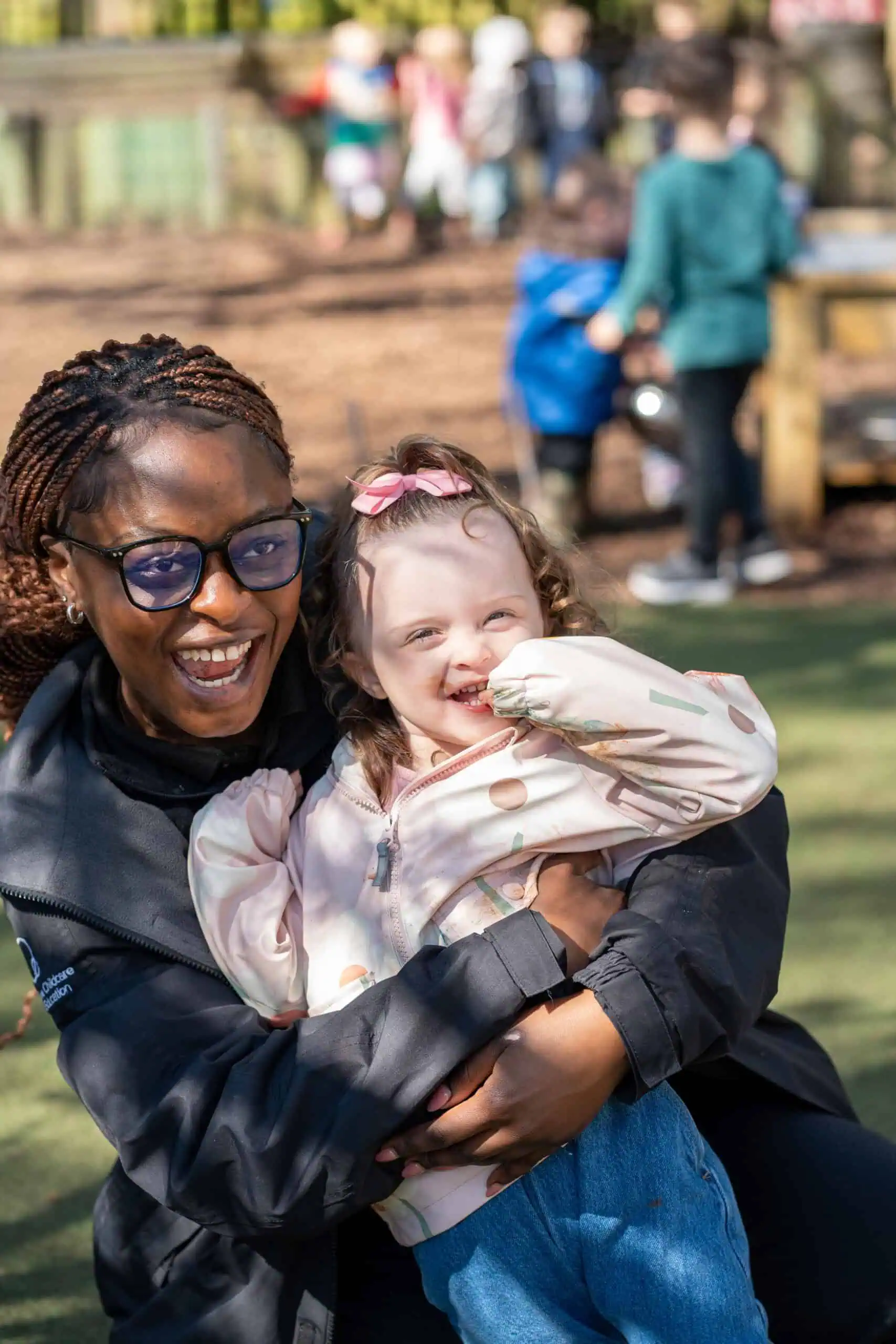
At Thrive, we believe that nature is one of the most inspiring classrooms a child can have. Our deep-rooted commitment to nature kindergartens and outdoor learning means that, whatever the weather, our children are out in the fresh air, exploring, questioning, and learning through their senses. Autumn, with its constant changes and endless natural treasures, is one of our favourite seasons of all.
Here is a look at how we use the changing seasons to spark curiosity across our nurseries, and how these autumn adventures support every area of your child’s early development.
Why the Seasons Make the Perfect Teacher
Young children learn best through first-hand experience. They need to see, touch, hear, and smell the world around them to truly make sense of it. The changing seasons offer exactly that: a living, breathing lesson that unfolds slowly, right on the nursery doorstep.
When children return to the same tree week after week, they begin to notice that something is happening. The leaves change colour, then start to fall, until one day the branches are almost bare. These gradual changes help children grasp big ideas such as time, growth, and cause and effect, concepts that are difficult to teach from a book but come naturally when observed outdoors.
Crucially, this kind of learning is led by the children themselves. Rather than following a rigid plan, our practitioners follow each child’s curiosity, building on the questions they ask and the discoveries they make. It is a perfect example of the power of play, where the most meaningful learning happens when children are free to explore at their own pace.
Treasure Hunts and Natural Collections
Few things excite a small child more than a treasure hunt, and in autumn the garden is overflowing with treasure. Armed with baskets and buckets, our children set off to gather leaves, pine cones, acorns, conkers, sycamore “helicopters”, and interesting sticks.
Once back inside (or at the outdoor table), these collections become rich learning resources:
- Sorting and Matching: Children group their finds by colour, size, shape, or texture, building the early classification skills that underpin later maths and science.
- Counting and Comparing: How many acorns are in the basket? Which stick is the longest? Which leaf is the biggest? These everyday questions are a natural, pressure-free way to build a love for maths in the early years.
- Pattern Making: Laying out leaves, cones, and conkers in repeating lines introduces early pattern recognition in a hands-on, creative way.
As always, safety comes first. Natural treasures such as conkers and acorns are only explored under close supervision, especially with our younger children, and we teach children that mushrooms and berries are for looking at, never for touching or tasting.
Muddy Hands, Curious Minds
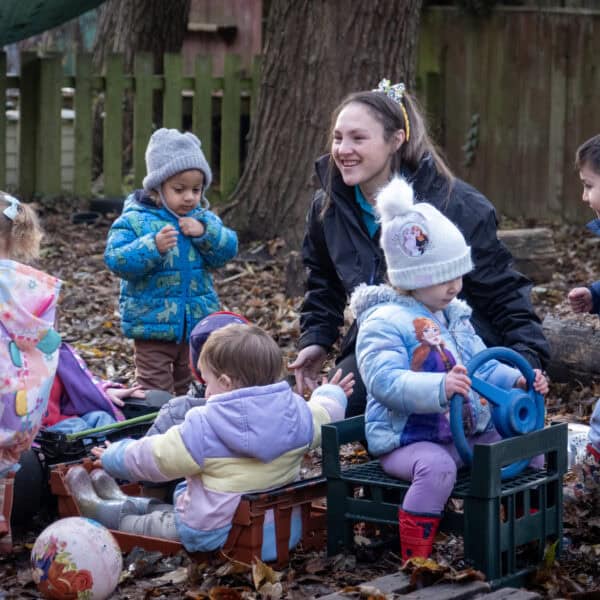
Autumn is the season of squelch. Rainy days transform our gardens into a sensory playground, and we embrace every drop. Wrapped up in puddle suits and wellies, children stomp, splash, and squish their way through the wetter months, discovering how mud feels between their fingers and how far a splash can travel.
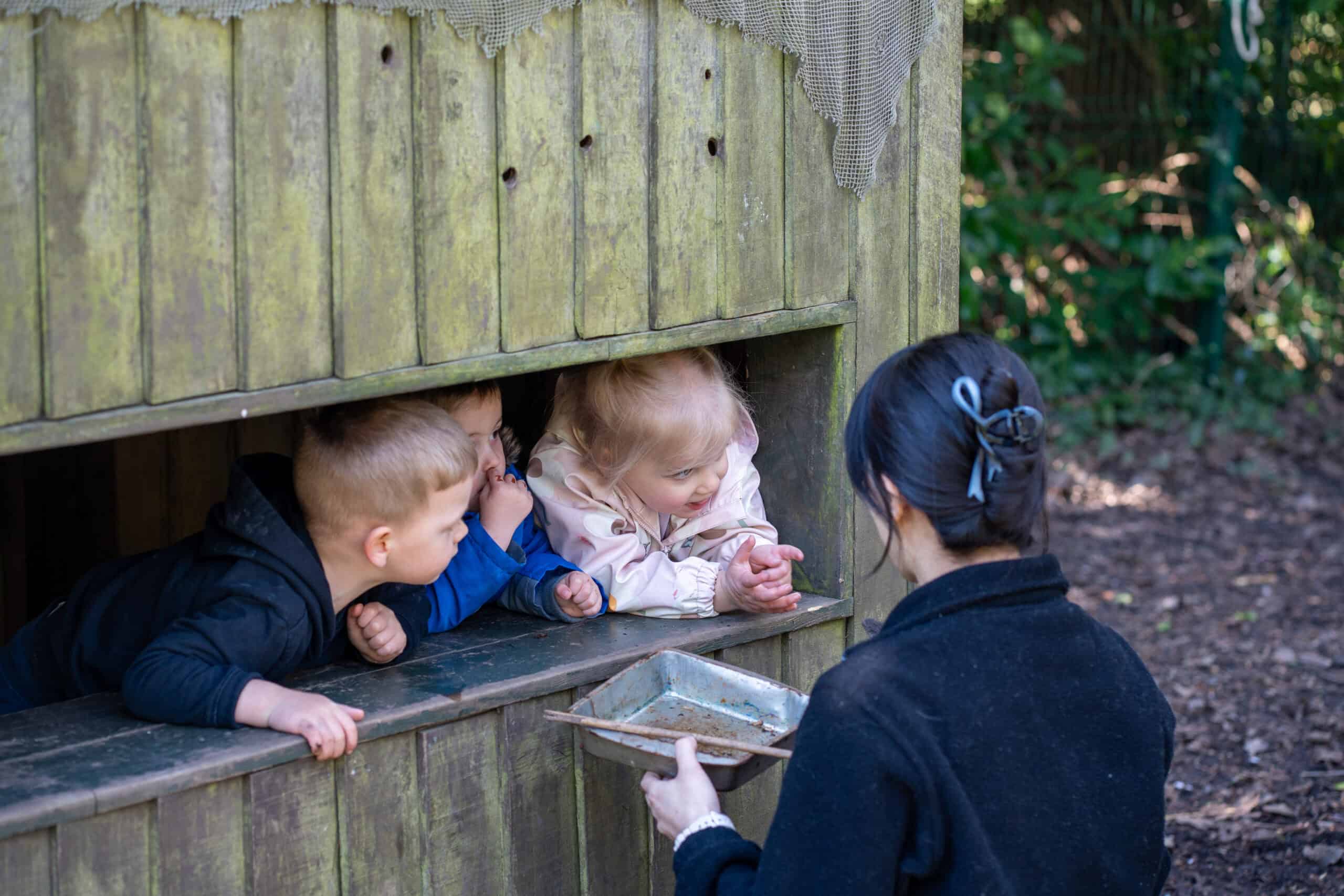
Our mud kitchens come into their own at this time of year. Children whip up “leaf soup”, “conker casseroles”, and “pine cone pies”, mixing, pouring, and stirring with real pots and utensils. This kind of rich, messy exploration is a wonderful reminder of why sensory play is vital for your child, supporting brain development, concentration, and language as children describe what they are making.
The great outdoors also offers natural opportunities for healthy challenge. Balancing along a fallen log, climbing a gentle muddy slope, or navigating a slippery path all help children build strength, coordination, and confidence. Because we champion positive risk-taking, our practitioners support children to judge these challenges for themselves, stepping back just enough to let them succeed on their own terms while staying close by to keep them safe.
Little Scientists in the Garden
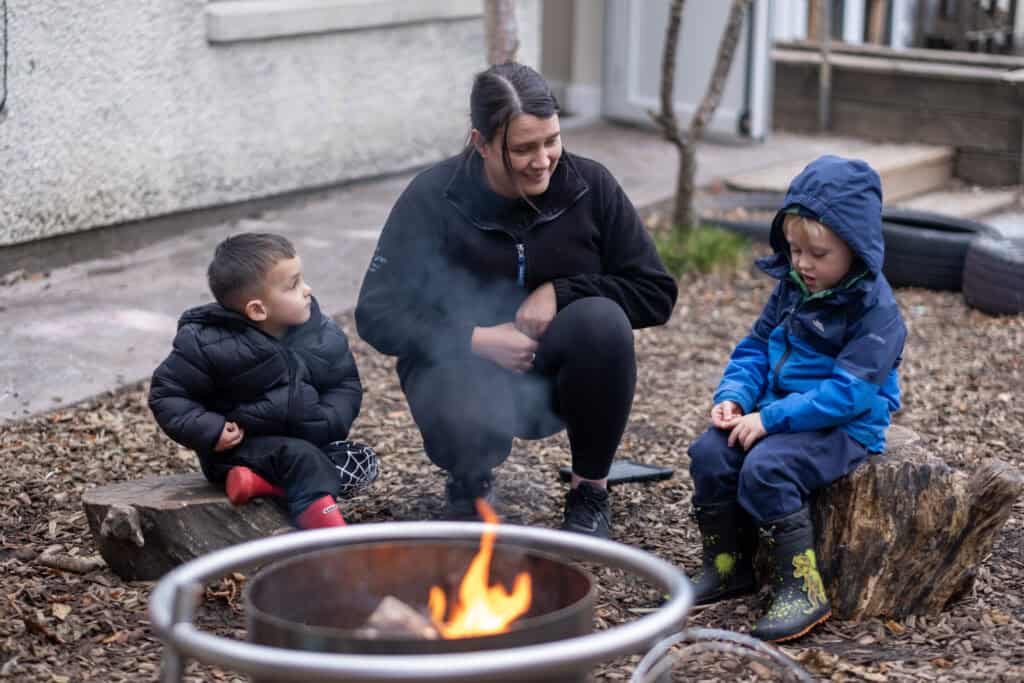
Autumn naturally raises big questions. Why do leaves change colour? Where do the minibeasts go when it gets cold? Why can we see our breath in the morning? Rather than simply giving answers, our practitioners encourage children to wonder, predict, and investigate for themselves.
Some of our favourite autumn explorations include:
- Leaf Detectives: Using magnifying glasses to study the veins, edges, and colours of fallen leaves, and comparing leaves from different trees.
- Minibeast Hunts: Carefully lifting logs and stones to discover woodlice, worms, and beetles settling in for winter, then gently putting everything back as we found it.
- Helping Our Wildlife: Building bug hotels and leaf piles for hedgehogs, and hanging homemade bird feeders to support garden birds as food becomes harder to find.
- Weather Watching: Feeling the wind, measuring rainfall in simple rain gauges, and noticing how the days grow shorter.
These hands-on investigations lay the foundations for scientific thinking: observing closely, asking questions, and testing ideas. They are a perfect seasonal companion to the ways we spark curiosity with early STEM and science experiments throughout the year, and they nurture a gentle sense of responsibility for the natural world.
Words, Stories, and Creative Expression
Autumn is a feast for the vocabulary. Leaves are crunchy, crispy, and crackly. Mud is squelchy, sticky, and slippery. The wind is whooshing and whistling. As children experience these sensations first-hand, practitioners introduce rich, descriptive language that helps them put their discoveries into words, a key part of nurturing early literacy and communication skills.
We also bring the season to life through stories and songs. Cosy story sessions about hibernating hedgehogs, falling leaves, and busy squirrels help children connect what they read with what they see in the garden every day.
Nature then becomes the paintbox. Children create leaf rubbings with chunky crayons, make collages from petals, seeds, and twigs, print with apples and pine cones, and paint with feathers or sticks instead of brushes. Threading leaves onto string, peeling conker cases, and picking up tiny seeds are also brilliant for strengthening little fingers, unlocking the pre-writing skills children will need when they start to hold a pencil.
Bringing Autumn Adventures Home
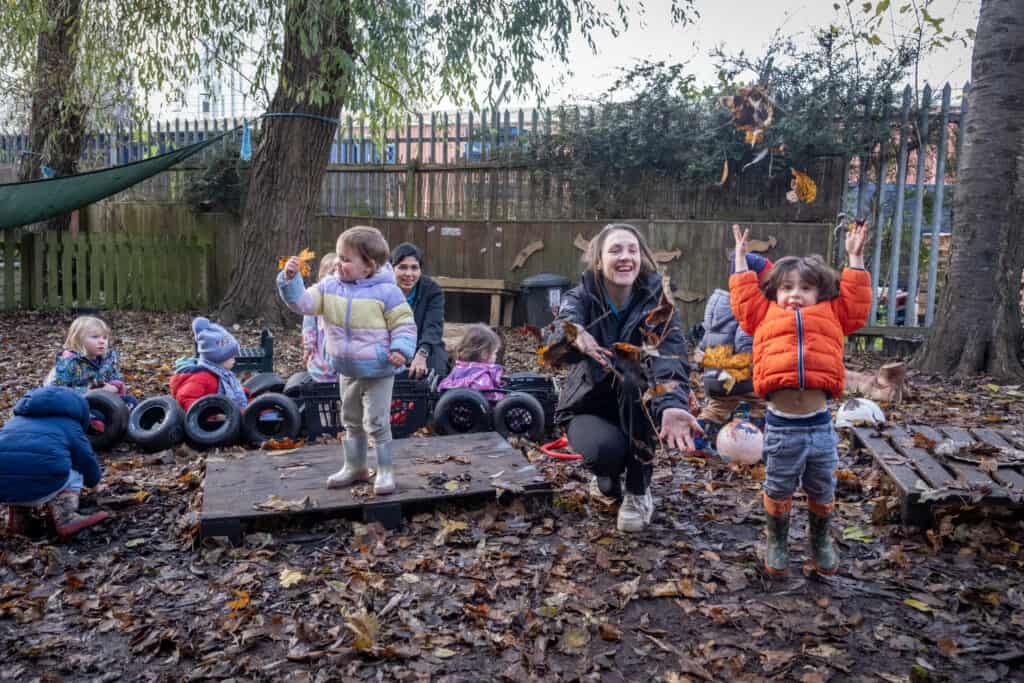
The wonderful thing about autumn learning is that it doesn’t need any special equipment. A local park, a tree-lined street, or even your own garden can become the setting for a family adventure. Here are a few simple ideas to try together:
- Autumn Scavenger Hunt: Make a simple picture list of things to find, such as a red leaf, a pine cone, a feather, and a smooth stone, and tick them off as you go.
- Puddle Play: Pop on wellies and waterproofs and embrace the rain. Jumping in puddles is fantastic exercise and endless fun.
- Nature Table: Create a small display at home for your child’s autumn finds, and talk together about what they have collected.
- Autumn Baking: Make apple crumble or pumpkin muffins together, letting your child help with weighing, pouring, and stirring.
We love hearing about the adventures our families enjoy together, so do share your child’s discoveries with their Key Person. This kind of parent partnership helps us build on your child’s interests at nursery, creating a joined-up learning journey between home and setting.
Growing a Lifelong Love of Nature
Autumn reminds us that learning doesn’t only happen indoors or at a table. It happens in a pile of crunchy leaves, at the bottom of a muddy puddle, and in the quiet moment a child spots a squirrel burying its acorns for winter. These experiences, repeated season after season, help children develop a deep connection with the natural world.
The benefits of outdoor play and exploration reach far beyond the garden gate. Children who spend time in nature grow more confident, more curious, and more resilient, and they learn to care for the world around them.
So this autumn, we invite you to wrap up warm, step outside, and see the season through your child’s eyes. You might be surprised by just how much there is to discover.
Our Latest News

Preparing for Nursery: A Gentle Guide for Parents Starting in September
September, 3 2026 Read story
Our Nursery Brochure
We will guide you through every step of your childcare journey and help you discover everything you need to know about our nursery. Come and join our family of nurseries across the UK. If you have any questions or enquiries, please feel free to contact us.
Alternatively, why not book a personal tour of our nursery where one of our friendly team will be happy to answer any questions you may have.