
How We Help Children Understand Their Emotions
Published on October 7, 2026
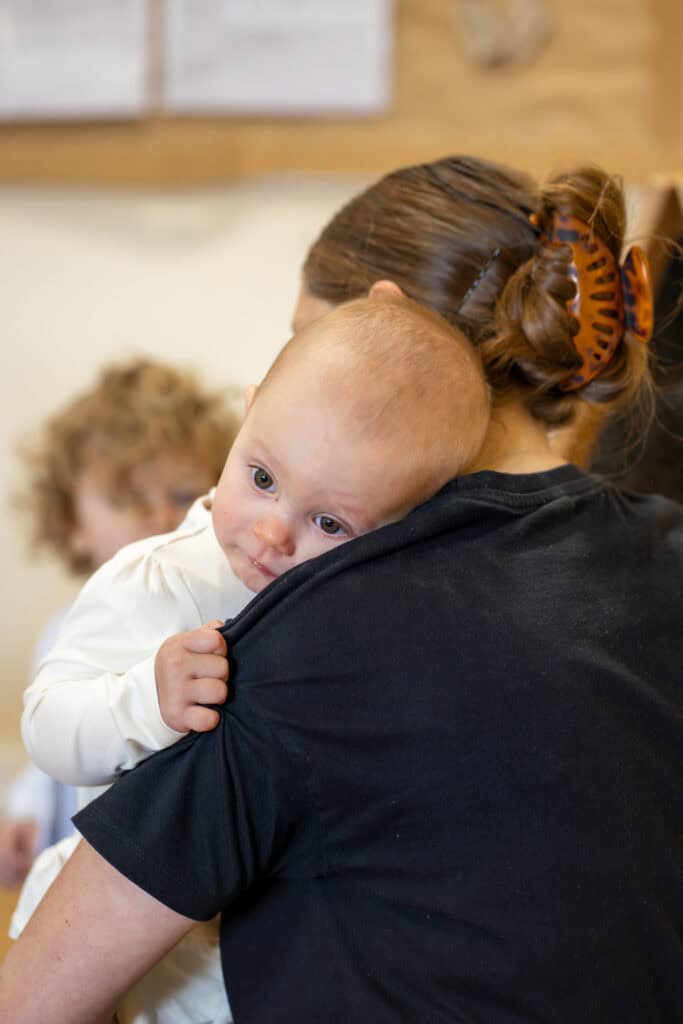
Picture the scene: a banana breaks in two, or the red shoes are in the wash, and suddenly your toddler dissolves into tears on the kitchen floor. To an adult, these reactions can feel baffling or exhausting. But to a young child, a broken banana isn’t a minor inconvenience. It is an overwhelming event that feels as enormous as a world crisis.
At Thrive, we often talk about “big feelings in little bodies.” Early childhood is a period of rapid brain development, but the prefrontal cortex, the part of the brain responsible for impulse control, logic, and reasoning, is still very much under construction.
When strong feelings hit, young children simply don’t yet have the tools to process them quietly. Building on our ongoing work in nurturing resilience in young children, our practitioners place a strong emphasis on emotional literacy: equipping children to recognise, name, and navigate their emotions safely.
Here is a look behind the scenes at how we foster emotional literacy every day in our nurseries, and how you can adapt these practical strategies at home when emotional storms brew.
Naming Feelings: Moving from Meltdowns to Meaning
Before children can learn to manage emotions, they need words for them. Without that vocabulary, frustration, fear, or envy tend to come out physically, through crying, throwing toys, or pushing.
In our nurseries, we practise “naming it to tame it.” When a child is upset, practitioners step in not to dismiss the feeling (“You’re fine, it’s nothing!”) but to acknowledge it and give it a name: “I can see you’re feeling really frustrated because your tower fell down.”
We use creative, concrete tools to help children make sense of these invisible feelings:
- Emotion Mirrors: Children look at their own faces in mirrors to explore what a “cross forehead,” “worried eyebrows,” or an “excited smile” looks like.
- Story Time Exploration: Using daily story time to talk about how characters feel when things go wrong. Storybook characters give children a safe distance from which to explore complex emotions.
- Normalising Every Emotion: We teach children that all feelings are allowed, even if all behaviours are not. It is entirely okay to feel angry; it is not okay to hurt a friend or break a toy.
The Magic of Co-Regulation (Before Self-Regulation)
We often hear about the importance of self-regulation, but young children cannot learn to calm down on their own until they have experienced calming down with a safe adult. This process is called co-regulation.
When a toddler is emotionally overloaded, their nervous system goes into fight-or-flight mode. Simply telling them to “calm down”, or sending them to a naughty step, can increase their distress. Instead, our practitioners lend children their own calm:
- Lowering Height and Tone: Practitioners drop down to eye level or sit on the floor nearby, keeping their body language open, their breathing slow, and their voice quiet and soothing.
- Offering a Safe Presence: We reassure the child with simple, grounding phrases: “I’m right here with you. You’re safe.”
- Leaning on Attachment: This is where the crucial role of the Key Person comes into its own. A deep, trusting bond means that when overwhelming moments hit, the child turns to their Key Person as a safe harbour.
Each time a child is calmed alongside a trusted adult, they absorb a little more of how calming down feels. Over time, these repeated experiences lay the groundwork for developing self-regulation skills, giving children the ability to manage stress independently as they grow.
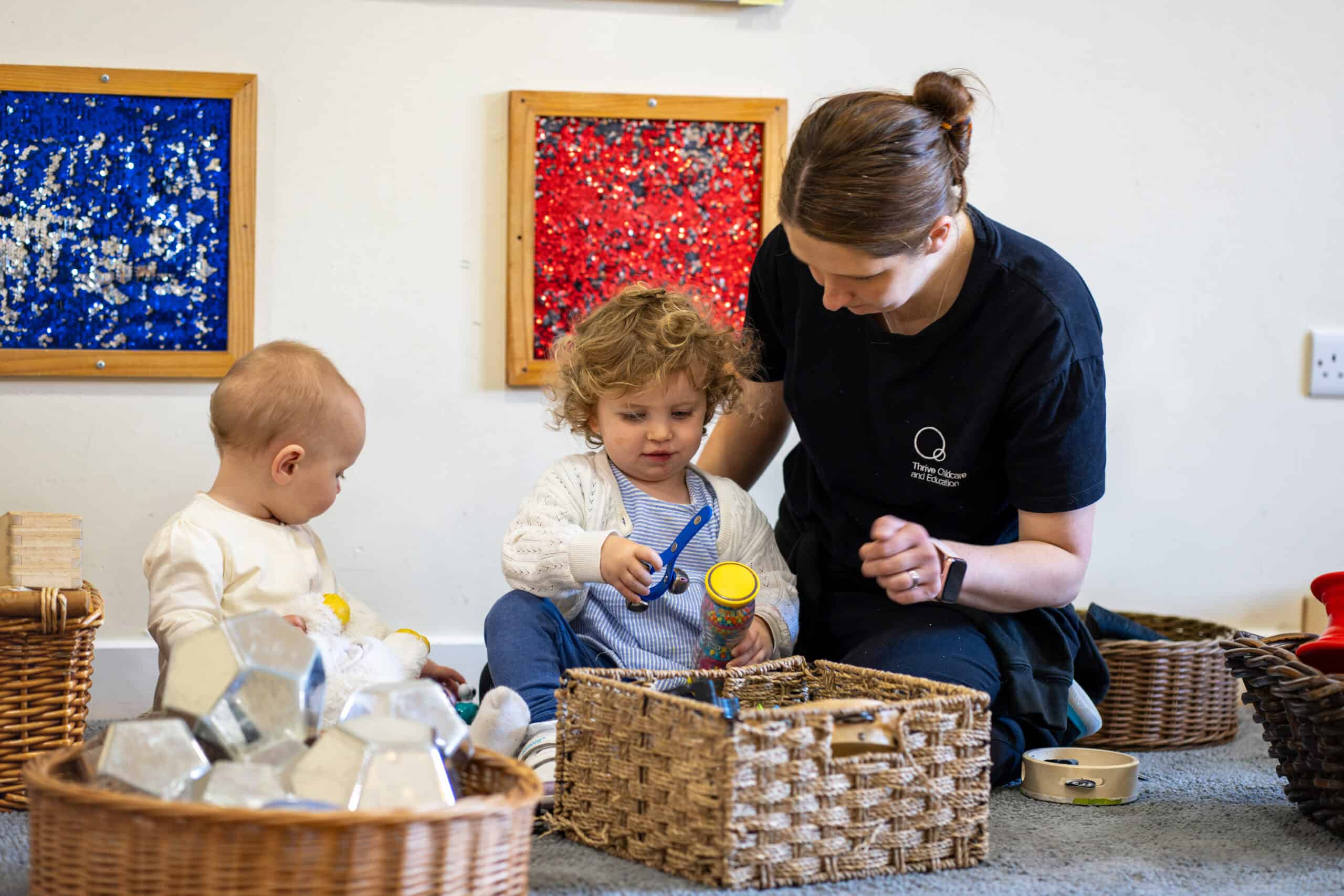
Practical Tools from the Nursery Floor
In intense moments, whether at nursery or at home, having a few gentle, repeatable strategies makes a remarkable difference. Here are four techniques our practitioners use every day when managing toddler tantrums and challenging behaviour:
- Cosy Nooks, Not Isolation: Every playroom has a quiet, comfortable space with soft cushions, dim lighting, and soothing sensory items such as glitter bottles or soft fabrics. These spaces are never used as a punishment. Instead, they are inviting refuges where children can choose to pause and gather themselves.
- Playful Breathwork: The best way to teach toddlers deep breathing is through play. We use simple images like “smell the flower, blow out the candle”, or trace around their fingers (“starfish breathing”), to guide slow, soothing breaths out.
- Focusing on Repair Over Guilt: When a big emotion leads to a clash with a friend, we focus on empathy rather than forced apologies. Understanding why forcing children to say sorry can backfire helps us guide children towards meaningful repair, such as checking whether their friend needs a tissue or helping to rebuild a fallen block tower.
- Heavy Work for Physical Release: Hands-on, effortful play, such as pushing a heavy wooden trolley, stacking large foam blocks, or carrying buckets of water in the garden, helps to ground a dysregulated body and safely release pent-up tension.
Building Long-Term Wellbeing
Emotional literacy is not just about managing difficult moments as they arise. It is about creating a culture where children feel deeply understood, safe, and valued for who they are. Proactively supporting young children’s mental health means treating emotions as normal, healthy signals rather than problems to be fixed.
When children learn early on that their feelings are manageable, and that the adults around them are calm, reliable guides, they develop the confidence to face life’s ups and downs. Parenting through toddler meltdowns can be draining, but by staying calm and offering a steady presence, you aren’t just getting through a tough afternoon. You are giving your child an emotional toolkit that will serve them for the rest of their life.
Our Latest News

Preparing for Nursery: A Gentle Guide for Parents Starting in September
September, 3 2026 Read story
Our Nursery Brochure
We will guide you through every step of your childcare journey and help you discover everything you need to know about our nursery. Come and join our family of nurseries across the UK. If you have any questions or enquiries, please feel free to contact us.
Alternatively, why not book a personal tour of our nursery where one of our friendly team will be happy to answer any questions you may have.