Supporting Every Voice: Our Approach to Speech and Language Development
Published on March 19, 2026

For parents, few milestones are as eagerly anticipated, or as anxiously monitored, as a child’s first words. From that initial, triumphant “Mama” or “Dada,” we eagerly await the explosion of language that allows us to finally understand what is going on inside their busy little minds.
However, when those words seem delayed, or if a toddler is struggling to make themselves understood, it can become a significant source of worry. You might find yourself comparing your two-year-old to the remarkably chatty child at the park, wondering, “Are they behind? Should I be doing more?”
At Thrive Childcare, we understand these anxieties perfectly. We also know that speech and language development is not a race, but a highly individualised journey. This guide explains our proactive, supportive approach to fostering communication, how we identify early needs, and how we partner with you to ensure your child’s voice is heard.
The Communication Pyramid: More Than Just Talking
When we think of communication, we immediately think of talking. But spoken words are actually the very tip of the iceberg. Speech and Language Therapists (SALT) often use the model of a “Communication Pyramid” to explain how language develops.
Before a child can clearly articulate a word (the top of the pyramid), they must build a solid foundation. This includes:
- Attention and Listening: The ability to tune into voices and sounds.
- Play and Interaction: Learning the “back-and-forth” nature of communication through turn-taking in games.
- Understanding (Receptive Language): Knowing what words mean before they can say them.
- Talking (Expressive Language): Using words, signs, or gestures to express needs.
If a child is struggling to speak, we don’t just focus on the words; we look at the foundation. Are they making eye contact? Can they follow a simple instruction? This holistic view is crucial, and you can explore these typical developmental markers in our comprehensive child development stages (0-5 years) guide.
How We Foster Communication Every Day
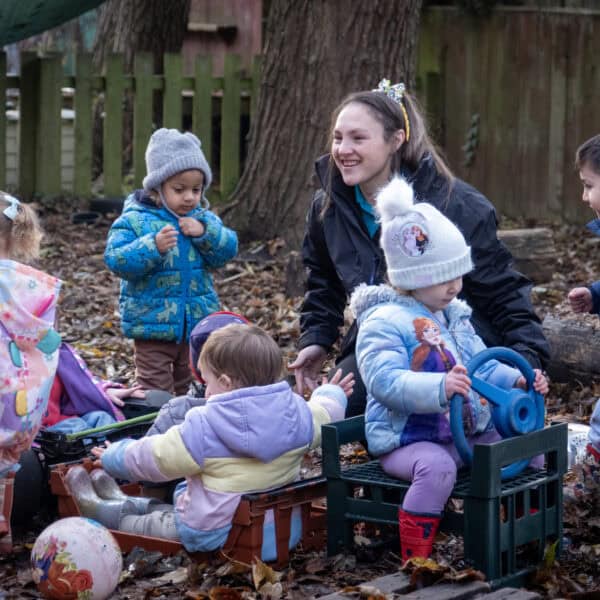
Our nurseries are ‘language-rich’ environments. We don’t teach speech through flashcards or rigid drills; we weave language into the very fabric of their day through play. As we highlight in our article on the power of play, children learn best when they are engaged, relaxed, and having fun.
Here are some of the everyday strategies our early years practitioners use to unlock communication:
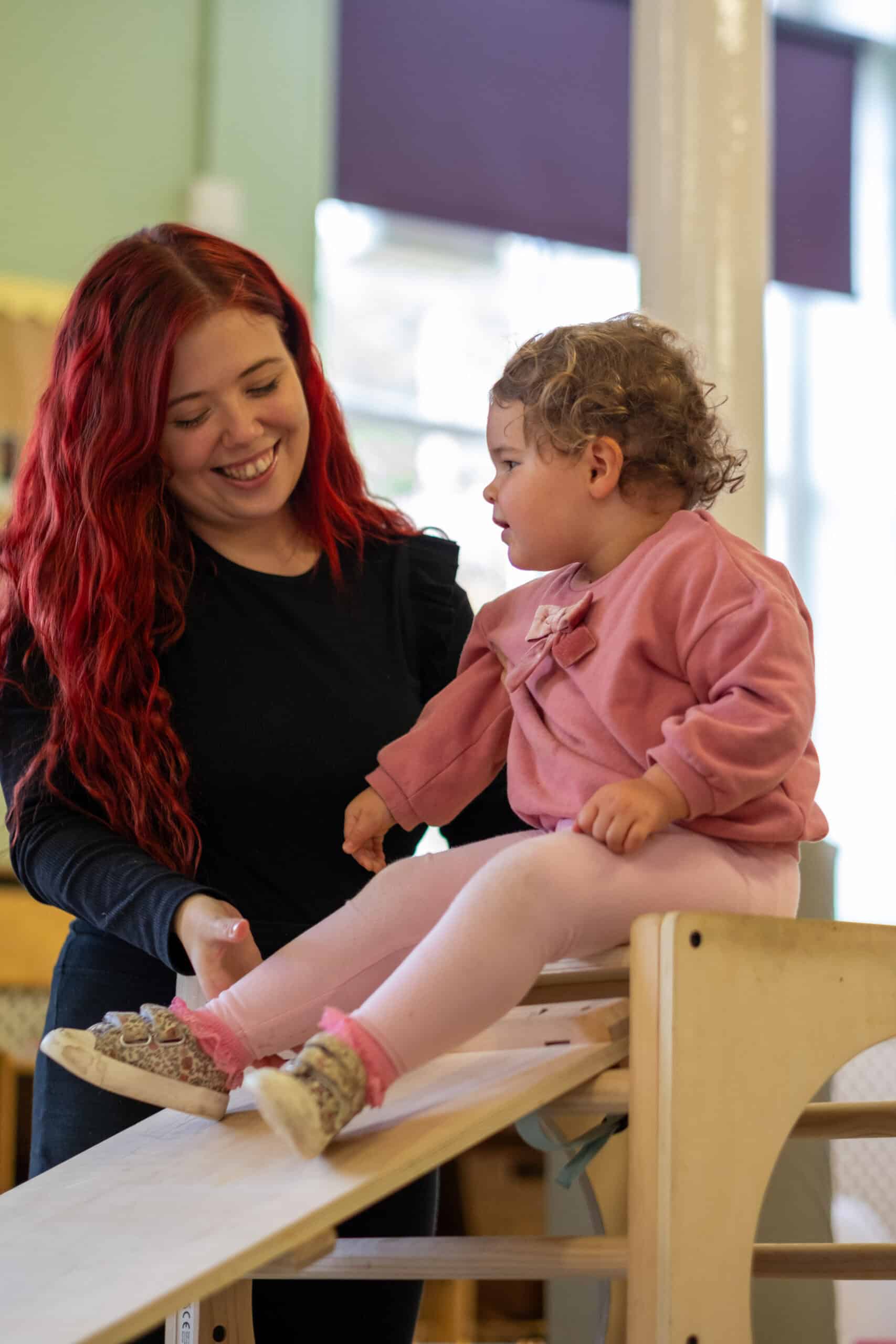
- The Running Commentary: Our practitioners narrate the day. When changing a nappy, washing hands, or building a tower, we use simple, clear language to describe what is happening: “Up, up, up goes the red brick! Oh no, it fell down!” This surrounds children with vocabulary linked directly to their actions.
- The 10-Second Rule: Adults are often quick to jump in and fill a silence. When we ask a child a question, we consciously pause and count to ten in our heads. Children, especially those processing new language, need extra time to hear the words, figure out their response, and coordinate the muscles to speak. Giving them this processing time dramatically increases their confidence.
- Extending and Expanding: When a child gives us a single word, we reflect it back and add to it. If a toddler points and says, “Car!” we respond with, “Yes, a big blue car! Beep beep!” This validates their communication while gently modeling the next step in sentence building.
- A Love of Literacy: Books, rhymes, and songs are communication super-tools. The rhythm and repetition of nursery rhymes help children tune into the sounds of speech. You can read more about how we use stories to build vocabulary in our post, From babble to books: nurturing early literacy and communication skills at Thrive.
Identifying Needs Early: The Role of Observation
Because our teams spend so much time observing your child in a social setting, we are often uniquely positioned to spot when a little extra help is needed.
This is where the relationship with your child’s Key Person is invaluable. As outlined in our piece on the role of the Key Person at Thrive, this practitioner intimately knows your child’s quirks, their preferred communication style, and their developmental baseline.
If a Key Person notices that a child is becoming frustrated because they cannot make themselves understood, or if they are consistently not responding to their name or instructions, we will initiate a gentle, supportive conversation with you.
We look for various signs, including:
- Difficulty following simple, everyday instructions.
- A vocabulary that seems stuck or is regressing.
- Heavy reliance on leading adults by the hand rather than pointing or vocalising.
- Frustration or behavioural outbursts stemming from an inability to communicate (which often ties into challenges with self-regulation).
Working Collaboratively: A Team Approach
If we agree that your child needs targeted support, we will work closely with you. We are not here to diagnose, but we are here to implement strategies and support referrals if needed.
Our approach is deeply collaborative, reflecting our belief in the parent partnership. Here is how we work together:
- In-Nursery Strategies: We might introduce visual timetables (using pictures to show what is happening next) or implement basic signing such as Makaton or Signalong. Signs do not delay speech; rather, they act as a bridge, reducing frustration and giving children a way to communicate while their verbal skills catch up.
- Working with External Professionals: If a Speech and Language Therapist (SALT) or Health Visitor becomes involved, we work directly with them. We will incorporate their specific targets into your child’s daily nursery play, ensuring consistency between the clinic, home, and nursery.
- Bilingual Support: For families where English is an Additional Language (EAL), we celebrate your home language. We ask parents for keywords in their mother tongue so we can comfort and communicate with the child, knowing that a strong foundation in their first language supports the acquisition of English.
Every Voice Matters
Communication is a fundamental human right, and helping children find their voice is one of the most rewarding parts of early years education. Whether your child is a non-stop chatterbox, a quiet observer, or a frustrated toddler trying to find the right words, we are here to listen.
By removing the pressure, filling their days with rich, playful language, and acting swiftly but calmly when extra support is needed, we ensure that every child at Thrive Childcare feels understood, valued, and ready to take on the world.
Our Latest News